Food & Agriculture
Heavy metals, pesticide residues, authenticity and contaminants.
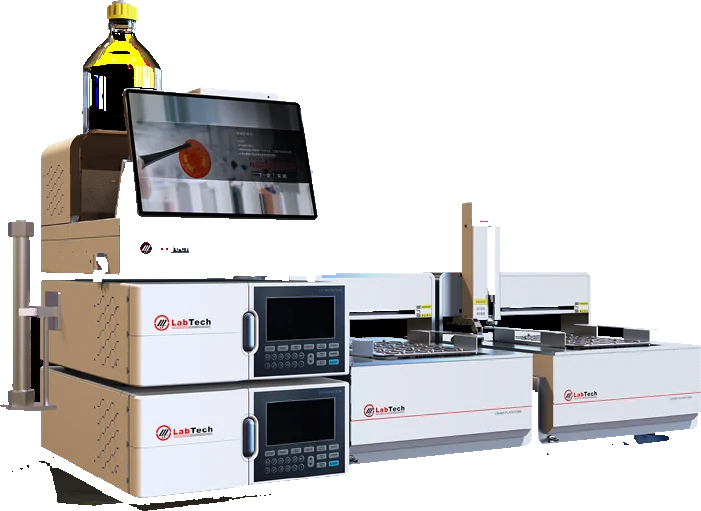
The workflow
Food testing covers an unusually wide matrix range — from rice and seafood to oils, spices and feed — and each matrix brings its own digestion or extraction problem.
LabTech's catalog is built around those differences: single-chamber digestion that takes food, soil and plastics in the same batch, GPC and SPE cleanup for pesticide residues, and isotope ratio mass spectrometry for authenticity and origin work.
What makes it difficult
- Complete digestion of fat- and carbohydrate-rich matrices without loss of volatile elements
- Removing matrix before GC-MS/MS analysis of pesticide residues
- Confirming geographical origin and adulteration claims
- Keeping reagent blanks low enough for trace-level work
Typical samples
Recommended systems
Microwave Digestion · GPC Cleanup · Isotope Ratio MS · Atomic Spectroscopy · Parallel Concentration
Step by step
How the sample moves.
Digest
Microwave digestion of food and feed, including high-fat samples, with reduced acid volumes.
Microwave Digestion →Analyze
ICP-MS and AAS for elements; GC front-end systems and HPLC for organic contaminants.
Atomic Spectroscopy →Verify origin
Stable isotope ratio mass spectrometry for authenticity, adulteration and origin testing.
Isotope Ratio MS →Systems
Recommended for Food & Agriculture.
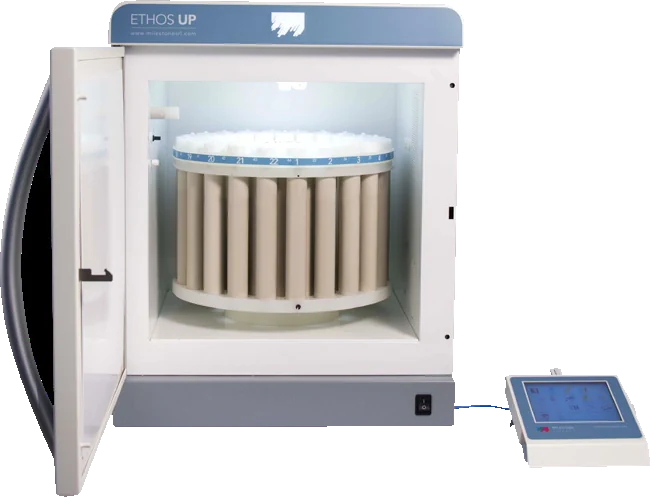
One pressurized chamber at 300 °C and 200 bar, with no vessel assembly.
Size-exclusion cleanup that strips matrix from food and environmental extracts.
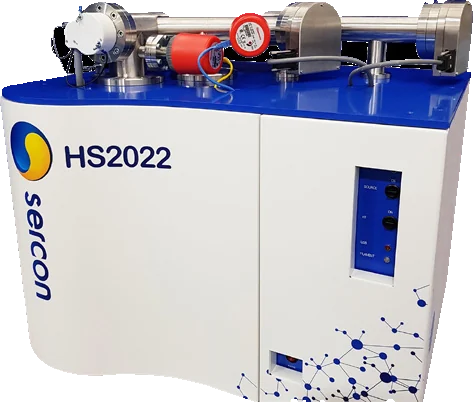
Stable isotope ratio, TOC and 13C breath analysis from Sercon.
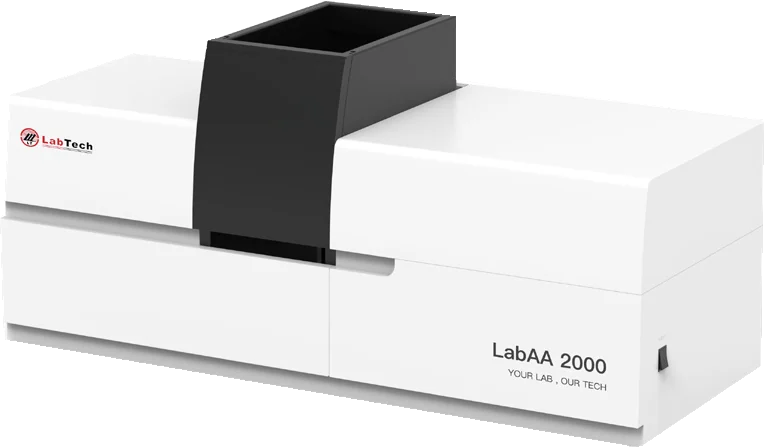
Flame, furnace, hydride and plasma atomic spectroscopy on one bench.
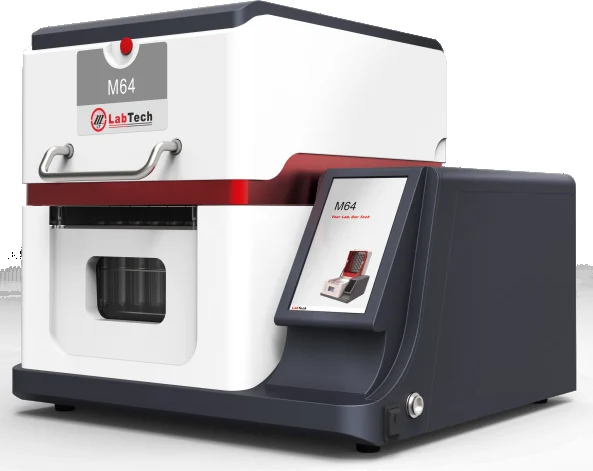
Water-bath heating and nitrogen blow-down across 64 positions at once.
Send us the regulation and the limit
We map it to a LabTech configuration and tell you where the catalog stops short of your specification.