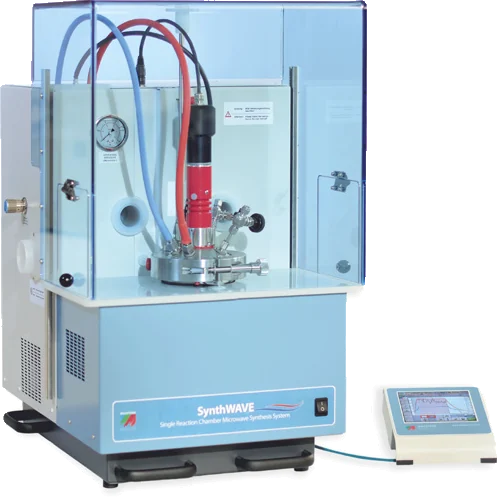
Microwave Digestion Systems

One pressurized chamber at 300 °C and 200 bar, with no vessel assembly.

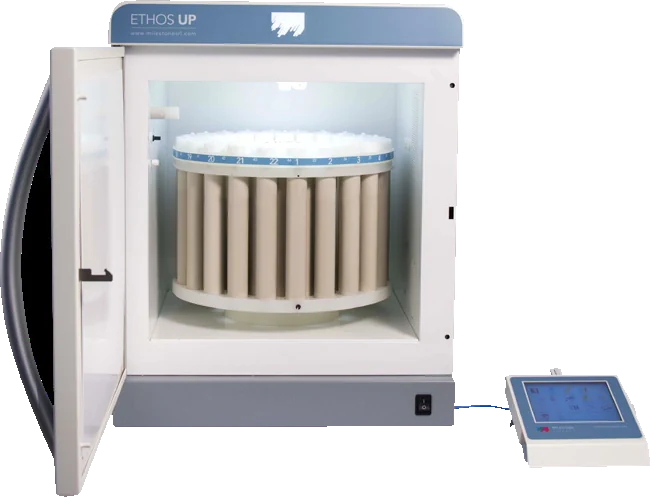
ETHOS UP microwave digestion and extraction system

Inorganic Sample Preparation · 5 models

Conventional microwave digestion makes each vessel the pressure boundary: laboratories seal, torque and later open dozens of tubes per batch. A pre-pressurized single-reaction-chamber system removes that step. Unsealed sample tubes sit inside one heated chamber, where steam and acid vapor bring the whole batch to 300 °C and up to 200 bar. That headroom dissolves matrices such as precious metals, catalysts, graphite, silicon carbide, polymers and refractories without a dedicated vessel for every method.

Single reaction chamber

One pre-pressurized chamber applies 300 °C and up to 200 bar to the entire batch.

70% less acid

Each tube takes 2–3 mL of acid, and no acid evaporation step follows.

Up to 77 samples

Chambers from 1 L to 4.2 L hold up to 77 tubes in a single run.

Standard tubes

Quartz, glass and TFM tubes replace dedicated digestion vessels, lowering running cost.

Models

Choose the configuration.

Because the chamber, not the tube, holds the pressure, samples need only 2–3 mL of acid, about 70% less than conventional microwave digestion. With so little acid there is no evaporation step: the digest is made up to volume and analyzed directly, which removes one to two hours of hot work per batch. Chambers from 1 L to 4.2 L take up to 77 tubes, and one batch can mix food, soil, ore, plastic and metal samples.

01

UltraWAVE 3

Pre-pressurized single-reaction-chamber microwave digestion system

UltraWAVE 3 applies the pre-pressurized single-reaction-chamber principle Milestone introduced in 1994. Unsealed tubes in one heated chamber reach 300 °C and up to 200 bar, so polymers, ceramics and refractory samples digest in a single step. It suits high-throughput laboratories that want one method for mixed sample types.

  • Working temperature of 300 °C and working pressure up to 200 bar
  • Digests precious metals, catalysts, graphite, silicon carbide, polymers and refractories
  • Handles food, soil, ore, plastic and metal samples in the same batch
  • Uses 2–3 mL of acid, about 70% less than conventional microwave digestion
  • No acid evaporation step; the digest is made up to volume directly
  • Automatic sealing and opening in about 10 seconds, with automatic pressure release
  • Single reaction chamber of 1–4.2 L, up to 77 samples per batch
Reaction chamberSingle chamber, 1–4.2 L
Temperature300 °C
PressureUp to 200 bar
Batch sizeUp to 77 samples
Acid volume2–3 mL per tube
02

UltraWAVE

Pre-pressurized single-reaction-chamber microwave digestion system

UltraWAVE uses the same pre-pressurized single chamber: quartz, glass or TFM tubes are loaded unsealed, the chamber is closed, and the batch is heated to 300 °C and up to 200 bar. Laboratories choose it where digestion capacity, acid consumption and vessel handling cost matter more than per-tube pressure control.

  • Single heated chamber instead of a sealed-vessel rotor
  • 300 °C and up to 200 bar applied across the whole batch
  • Standard quartz, glass or TFM tubes, with no dedicated vessels
  • 2–3 mL of acid per sample and no evaporation step
  • Chamber volume from 1 L to 4.2 L
  • Up to 77 samples digested together
Reaction chamberSingle chamber, 1–4.2 L
Temperature300 °C
PressureUp to 200 bar
Batch sizeUp to 77 samples
03

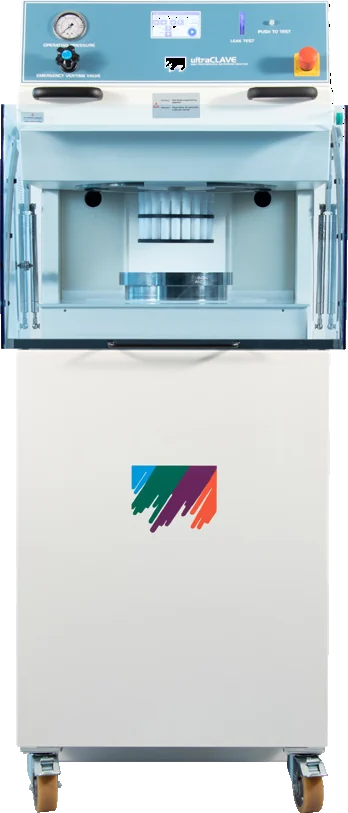
UltraCLAVE

Pre-pressurized single-reaction-chamber microwave digestion system

UltraCLAVE is listed in the same single-reaction-chamber family and follows the same workflow: tubes are loaded unsealed, the chamber is closed, and microwave heating brings the batch to 300 °C and up to 200 bar. It serves laboratories that digest difficult inorganic matrices in large batches and want to skip vessel assembly.

  • Pre-pressurized single reaction chamber
  • Working temperature of 300 °C with pressure up to 200 bar
  • Accepts standard quartz, glass and TFM tubes
  • 2–3 mL of acid per tube, with no acid evaporation
  • Automatic sealing and opening in about 10 seconds
  • Up to 77 samples per batch
Reaction chamberSingle chamber, 1–4.2 L
Temperature300 °C
PressureUp to 200 bar
Batch sizeUp to 77 samples
04

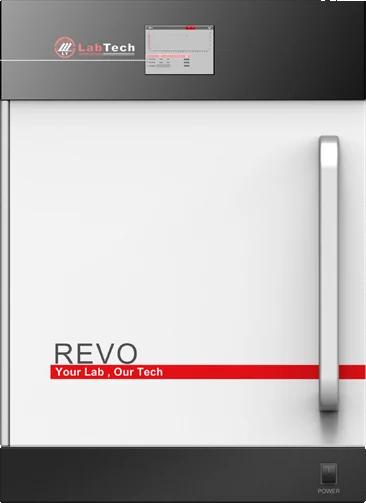
REVO

Microwave digestion and extraction system

REVO is LabTech's microwave digestion and extraction system, developed from 20 years of inorganic sample preparation experience. The design emphasizes operator safety and straightforward daily use rather than a long list of modes. It is aimed at routine laboratories that value safe operation and a short learning curve.

  • Microwave digestion and extraction on one instrument
  • Developed by LabTech from 20 years of inorganic sample preparation experience
  • Safety-led design for routine laboratory operation
  • Straightforward controls and day-to-day handling
  • Built with LabTech microwave technology and manufacturing
05

ETHOS UP

Microwave digestion and extraction system with ultra-high pressure rotor

ETHOS UP is Milestone's microwave digestion and extraction system, combining instrument hardware, intelligent operating software, several safety monitoring systems and an ultra-high pressure rotor. The rotor carries demanding digestion methods while the software and monitoring layer keep routine operation consistent. It covers both digestion and extraction work on one platform.

  • Ultra-high pressure rotor for demanding digestion methods
  • Intelligent, operator-friendly control software
  • Multiple safety monitoring systems during a run
  • Digestion and extraction capability on one platform
  • Milestone hardware and instrument engineering
RotorUltra-high pressure rotor
SafetyMultiple safety monitoring systems

Full specifications for other configurations, voltages and options are available on request.

The range

Configurations and accessories.

Applications

Where this range is used.

  • Trace metals in soil, rock and ore samples
  • Food and feed samples digested alongside soil and ore in one batch
  • Polymers, graphite, silicon carbide and refractory materials
  • Precious metals and catalysts
  • Plastic and metal samples in a mixed batch
  • Digests for ICP-OES and ICP-MS analysis

Environmental & Water → · Food & Agriculture → · Pharmaceutical & Biopharma → · Materials, Geology & Mining →

Questions

Before you buy.

How much acid does single-reaction-chamber digestion use?

Each tube needs 2–3 mL, roughly 70% less than conventional microwave digestion. Because the acid volume is small, the digest needs no evaporation step: it is made up to volume and measured directly. That also avoids the fumes and energy use of a hot evaporation block, which normally takes one to two hours.

Can one batch contain different sample types?

Yes. The chamber heats every tube to the same temperature and pressure, so food, soil, ore, plastic and metal samples can share a run. Laboratories use this to fill a batch instead of waiting for enough samples of one matrix. A single chamber takes up to 77 tubes.

Do UltraWAVE systems need special digestion vessels?

No. Standard quartz, glass or TFM tubes can be used, so consumable cost stays low. The chamber closes and opens automatically in about 10 seconds and releases pressure automatically, so operators do not torque and disassemble up to 77 vessels by hand.

Send the matrix and the limit

We reply in one working day with a configuration, the consumables it needs and a lead time.