Atomic Absorption, Fluorescence and ICP-OES

Flame, furnace, hydride and plasma atomic spectroscopy on one bench.

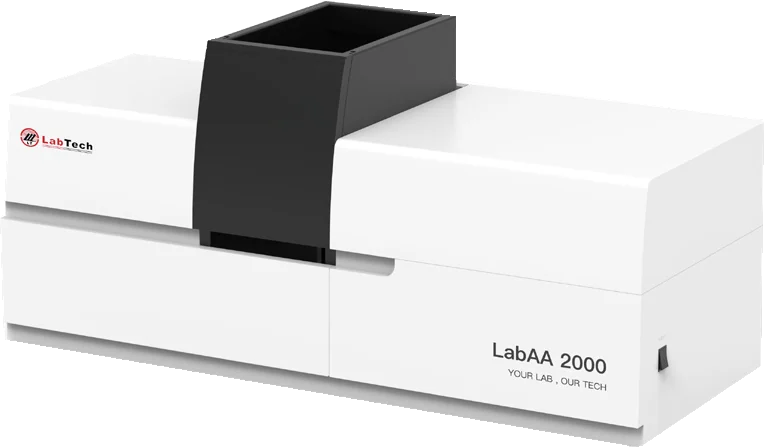
LabAA 2000 atomic absorption spectrometer

Analytical Instruments · 3 models

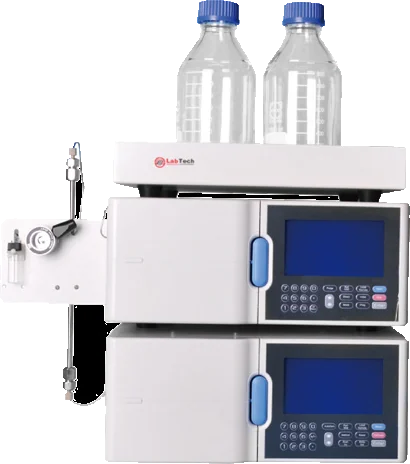
Flame AAS, graphite furnace AAS, hydride-generation AFS and ICP-OES answer different parts of the same elemental question, and most working laboratories end up running more than one. LabTech builds all three techniques into a single spectroscopy range. LabAA 2000 covers flame and furnace atomization on one instrument, LabAF1000 handles hydride-forming elements such as arsenic and mercury, and LabICP 1000 adds scanning ICP-OES for multi-element work and rare-earth spectra.

Two atomizers

LabAA 2000 switches automatically between flame and graphite furnace, with no manual rebuild.

Eight-lamp turret

Working and preheat lamps are assigned in software and changed automatically during analysis.

Three channels

LabAF1000 measures three hydride-forming elements at once, which shortens every sample batch it runs.

1 m optics

LabICP 1000 separates complex rare-earth spectra with a thermostatted 1 m focal-length path.

Models

Choose the configuration.

The design emphasis is on changeover cost. LabAA 2000 moves between flame and furnace atomizers automatically and keeps eight lamps on a rotating turret, so a method switch does not become a manual rebuild. LabAF1000 runs three channels at once and offers three hydride-generation modes. LabICP 1000 uses a 1 m focal-length optical system and a closed-loop RF generator to hold resolution and power steady.

01

LabAA 2000

Flame and graphite furnace atomic absorption spectrometer

A modular AAS that carries both flame and graphite furnace atomizers and switches between them automatically. Eight lamps sit on a rotating turret with working and preheat positions assigned in software, and both atomizer paths offer deuterium and self-absorption background correction. It suits laboratories running flame and furnace methods side by side that want to add capability later.

  • Flame and graphite furnace atomizers with automatic switching and matching
  • Modular design, configured at purchase and upgradeable afterwards
  • Automatic eight-position lamp turret with working and preheat lamp assignment
  • Deuterium and self-absorption background correction on both atomizer systems
  • All-titanium burner for steady combustion and fast thermal equilibration
  • Flame, acetylene leak, pressure and cooling-water monitoring
  • Software supports 21 CFR Part 11, permission management and audit trails
AtomizersFlame and graphite furnace, automatic switching
Lamp turret8 positions, automatic
Background correctionDeuterium and self-absorption
Software21 CFR Part 11, permissions, audit trail
02

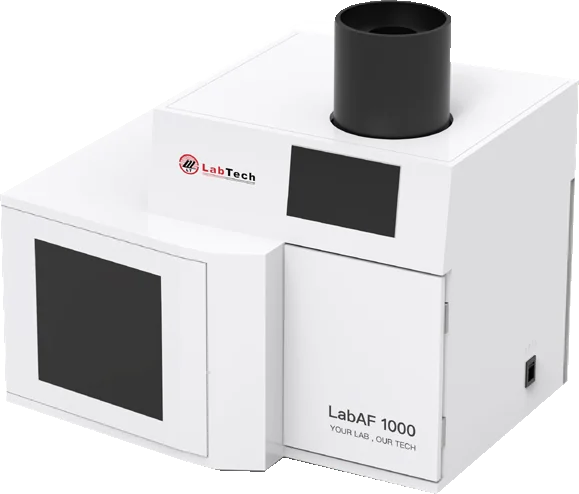
LabAF1000

Hydride-generation atomic fluorescence spectrometer

A three-channel atomic fluorescence spectrometer for hydride-forming elements. Three elements are measured simultaneously without cross-channel interference, and the hydride generation system offers sequential injection, continuous flow and intermittent flow modes to match different sample types. A shielded double-layer quartz atomizer reduces liquid-phase interference and memory effect.

  • Three-channel, three-element simultaneous determination with no cross-channel interference
  • Sequential injection, continuous flow and intermittent flow hydride generation modes
  • Shielded double-layer quartz atomizer reduces liquid interference and memory effect
  • Solar-blind photomultiplier and shielded short-focal-length optics for signal-to-noise
  • Hollow cathode lamps with pulse-modulated drive, automatic lamp ID and hour logging
  • Speciation analysis of mercury and arsenic
  • Software supports 21 CFR Part 11, permission management and audit trails
Channels3, simultaneous three-element determination
Hydride generationSequential injection, continuous flow, intermittent flow
DetectorSolar-blind photomultiplier
Software21 CFR Part 11, permissions, audit trail
03

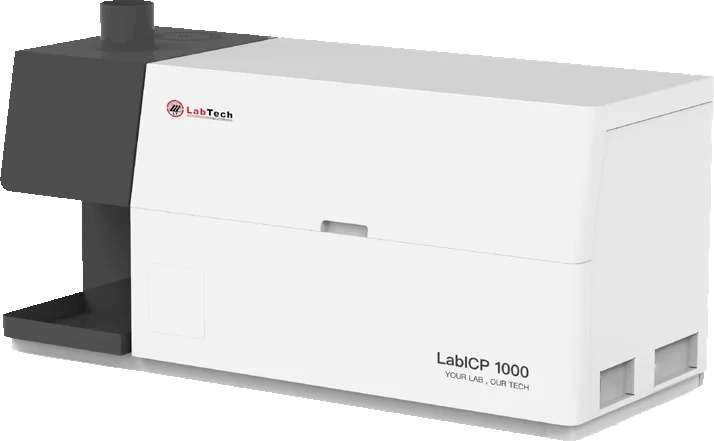
LabICP 1000

Inductively coupled plasma optical emission spectrometer (ICP-OES)

A scanning ICP-OES built around a 1 m focal-length optical system and aimed at samples with dense spectra. Resolution is sufficient to separate the lines of rare-earth elements, which makes the instrument suited to rare-earth and permanent-magnet analysis. A closed-loop RF generator holds power control to better than 0.1%, and the optical chamber is thermostatted for measurement stability.

  • High resolution across the working range, separating complex rare-earth spectra
  • Closed-loop RF generator holds power control to better than 0.1%
  • Reflective single-channel scanning optics avoid introducing additional chromatic aberration
  • 1 m focal-length optical path for signal-to-noise and low matrix effects
  • Thermostatted optical chamber for stable measurement
  • Suited to rare-earth elements and permanent-magnet materials
Focal length1 m
Power controlBetter than 0.1%
OpticsReflective, single-channel scanning
Optical chamberThermostatted

Full specifications for other configurations, voltages and options are available on request.

The range

Configurations and accessories.

Applications

Where this range is used.

  • Trace metals in complex-matrix digests requiring background correction
  • Flame and graphite furnace determinations run on the same instrument
  • Arsenic and mercury speciation analysis
  • Hydride-forming elements measured three at a time
  • Rare-earth elements in ores and processed materials
  • Permanent-magnet materials with overlapping emission lines

Food & Agriculture → · Materials, Geology & Mining →

Questions

Before you buy.

Can one AAS run both flame and graphite furnace methods?

Yes. LabAA 2000 carries both atomizers and switches and matches them automatically, so flame and furnace methods can share one instrument. The modular design also lets a laboratory start with one configuration and add capability later. Both atomizer paths include deuterium and self-absorption background correction.

Which of these instruments supports 21 CFR Part 11?

The catalog states 21 CFR Part 11 compliance, permission management and audit trails for LabAA 2000 and LabAF1000. That covers the regulated environments these two instruments usually serve. The LabICP 1000 optical emission system is described in the catalog by resolution, generator and optics, without a data-integrity claim.

Should I choose AAS, AFS or ICP-OES?

AAS is the routine choice for individual metals by flame or furnace, and LabAA 2000 covers both on one instrument. AFS is efficient for hydride-forming elements, which is why LabAF1000 measures three at a time and can speciate arsenic and mercury. ICP-OES suits multi-element work and matrices with complex spectra, such as rare-earth and permanent-magnet samples.

Send the matrix and the limit

We reply in one working day with a configuration, the consumables it needs and a lead time.