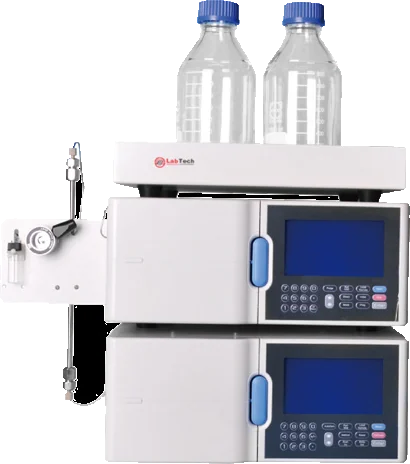
LC600 HPLC Systems

Isocratic and binary high-pressure gradient HPLC for mixture analysis.

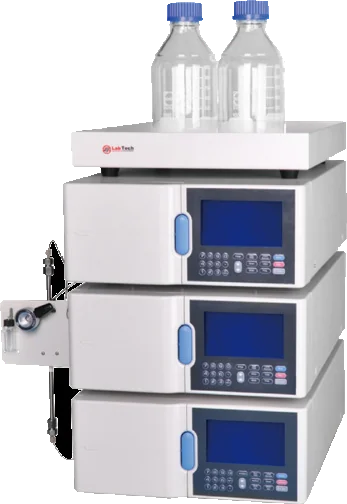
LC600 binary high-pressure gradient HPLC system

Analytical Instruments · 2 models

The LC600 range covers the two solvent-delivery configurations most routine HPLC laboratories specify: isocratic and binary high-pressure gradient. Both systems are built for the separation, identification and quantification of complex component mixtures, and both are used across chemical, pharmaceutical, food, feed and animal-husbandry work. The choice between them is a question of method: a fixed mobile-phase composition for a defined assay, or a programmed solvent change when a mixture spans a wide retention range.

Two modes

Isocratic and binary high-pressure gradient systems cover fixed and programmed mobile phases.

Identify and quantify

Both systems separate, identify and quantify the components of complex mixtures in a single run.

Sector coverage

Applied in chemical, pharmaceutical, food, feed and animal-husbandry laboratories as routine bench systems.

Models

Choose the configuration.

The catalog material for this page is short, so the descriptions stay at the level the source supports. The isocratic system runs a constant mobile phase and suits methods already developed on that basis. The binary high-pressure gradient system blends two solvents under high pressure for separations that need a composition ramp. Detector, column and software options are confirmed by LabTech for the method in question.

01

LC600 isocratic

Isocratic high-performance liquid chromatography system

An isocratic HPLC system for separating, identifying and quantifying components in complex mixtures. Mobile-phase composition stays constant for the whole run, which suits methods developed and validated on a single solvent condition. It is used in chemical, pharmaceutical, food, feed and animal-husbandry laboratories.

  • Isocratic solvent delivery at a fixed mobile-phase composition
  • Separation, identification and quantification of complex component mixtures
  • Applied in chemical and pharmaceutical laboratories
  • Also used for food, feed and animal-husbandry analysis
Solvent deliveryIsocratic, fixed mobile-phase composition
PumpP600 tandem double plunger
Flow range0.001–9.999 mL/min
Flow precision<0.08% RSD
Flow accuracy±1%
Maximum pressure42 MPa
DetectorUV600Plus, 190–600 nm
Wavelength accuracy±1.0 nm
Column ovenRT–120 °C, ±0.1 °C, PID
02

LC600 binary high-pressure gradient

Binary high-pressure gradient high-performance liquid chromatography system

A binary high-pressure gradient HPLC system for mixtures whose components need a changing mobile phase to separate. Two solvents are blended under high pressure and programmed through the run, which extends what a single method can resolve. Like the isocratic model, it serves chemical, pharmaceutical, food, feed and animal-husbandry laboratories.

  • Binary high-pressure gradient delivery from two solvents
  • Programmed composition ramps resolve mixtures a fixed mobile phase cannot
  • Separation, identification and quantification of complex component mixtures
  • Used in chemical, pharmaceutical, food, feed and animal-husbandry laboratories
Solvent deliveryBinary high-pressure gradient
PumpP600 tandem double plunger
Flow range0.001–9.999 mL/min
Flow precision<0.08% RSD
Flow accuracy±1%
Maximum pressure42 MPa
DetectorUV600Plus, 190–600 nm
Wavelength accuracy±1.0 nm
Column ovenRT–120 °C, ±0.1 °C, PID

Specifications compiled from the LabTech US product pages (labtechus.com), retrieved 31 October 2026. Prices excluded; configurations vary by region.

The range

Configurations and accessories.

Applications

Where this range is used.

  • Separation and quantification of multi-component mixtures
  • Pharmaceutical samples requiring identification and assay
  • Food samples
  • Feed samples
  • Animal-husbandry samples
  • Chemical industry samples

Pharmaceutical & Biopharma →

Questions

Before you buy.

What is the difference between isocratic and binary high-pressure gradient HPLC?

An isocratic system holds the mobile-phase composition constant for the whole run, so the separation depends on the column and the solvent chosen up front. A binary high-pressure gradient system blends two solvents under high pressure and changes the ratio during the run, which separates mixtures whose components differ widely in retention. The LC600 range offers both configurations.

Which LC600 configuration should I choose?

Start from the method: if it is already validated with a fixed mobile phase, the isocratic LC600 matches it directly. If the method needs a solvent ramp to resolve all components in reasonable time, the binary high-pressure gradient system is the fit. Both are used across chemical, pharmaceutical, food, feed and animal-husbandry work.

What detector and column options are available for the LC600?

The 2023 catalog describes the LC600 systems by application and solvent-delivery mode, without listing detector, column or software specifications. LabTech can confirm the current configuration options for the method you intend to run. Ask for the configuration sheet when you request a quotation.

Send the matrix and the limit

We reply in one working day with a configuration, the consumables it needs and a lead time.