GC Sample Introduction Systems

Pyrolysis, purge-and-trap and thermal desorption front ends for GC and GC-MS.

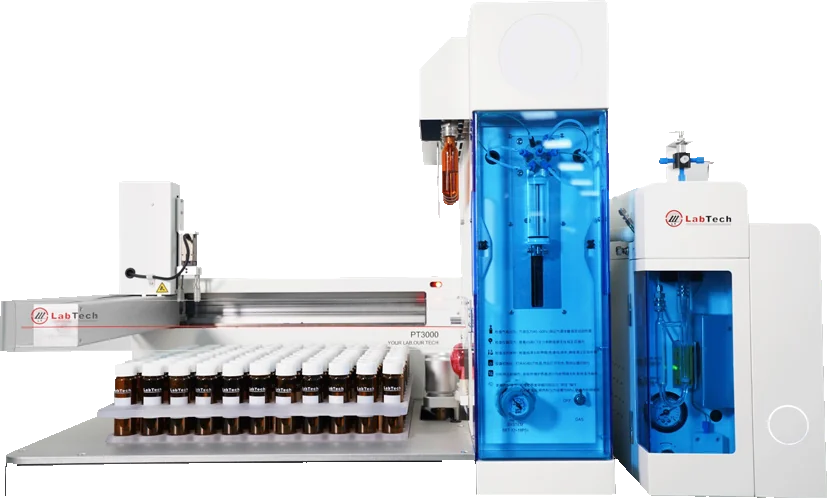
PT3000 automatic purge-and-trap system

Organic Sample Preparation · 4 models

Pyrolysis, purge-and-trap and thermal desorption answer the same problem: the analytes are locked in a solid matrix, dissolved in water, or too dilute for a direct injection port. CDS Analytical has built pyrolysis instruments since 1969 and is now in its sixth generation, coupling pyrolyzers to GC-MS through a heated transfer line. PT3000 adds automated purge-and-trap for volatile organic compounds in water and soil, with the same emphasis on sample integrity.

1300 °C pyrolysis

Ambient to 1300 °C in 1 °C increments, held to ±0.1 °C by platinum resistance heating.

RSD ≤1.5%

Polystyrene repeatability of RSD ≤1.5% keeps pyrograms comparable between batches and operators.

Trap or no-trap

Software switches between direct pyrolysis and trap-and-transfer in one click, so one instrument covers both methods.

Separate soil and water

PT3000 prepares soil and water on independent paths, with an anti-blocking soil line and physical defoaming.

Models

Choose the configuration.

A front end decides what reaches the column, so its temperature control, water management and blank level set the detection limit of the whole method. The CDS pyrolyzer holds ±0.1 °C across a range that reaches 1300 °C, switches reaction gas to simulate oxidative conditions, and can trap or bypass the trap in software. PT3000 removes water centrifugally at room temperature and meters internal standard under electronic pressure control, which keeps volatile response stable across long batches.

01

CDS 6200

Pyrolysis system for GC-MS

CDS 6200 is a pyrolysis system from CDS Analytical's six-generation line, coupled directly to a GC-MS through a heated transfer line. Samples are heated from ambient to 1300 °C under programmable ramps, with platinum resistance heating and real-time temperature monitoring. Trap and no-trap modes are both available, and the quartz pyrolysis tube can be reused and observed during the run.

  • Pyrolysis from ambient to 1300 °C in 1 °C increments
  • Temperature accuracy of ±0.1 °C with live monitoring
  • Repeatability of RSD ≤1.5% measured on polystyrene
  • Programmable ramps of up to 10 steps per program
  • Heated transfer line to the GC inlet, rated to 350 °C
  • Reaction gas switchable, for example helium to air for oxidative tests
Pyrolysis temperatureAmbient to 1300 °C, 1 °C increments
Temperature accuracy±0.1 °C
RepeatabilityRSD ≤1.5% (polystyrene)
Transfer lineUp to 350 °C
Ramp programUp to 10 steps
02

CDS 5200 HP-R

Pyrolysis system for GC-MS, high-pressure configuration

CDS 5200 HP-R is the high-pressure variant in the CDS pyrolysis line, built on the same heated-chamber and transfer-line architecture as the other members. It is intended for laboratories that need the series' full temperature range and gas switching, and a high-pressure module appears among the options offered for the line. Trap and no-trap operation are both software-selectable.

  • High-pressure configuration within the CDS pyrolysis line
  • Ambient to 1300 °C working range with 1 °C increments
  • Platinum resistance heating with real-time temperature monitoring
  • One-click switching between trap and no-trap modes
  • Reaction gas changeover, including air for simulated combustion
  • Options include autosampler, cryogenic trap and dynamic headspace
Pyrolysis temperatureAmbient to 1300 °C, 1 °C increments
Temperature accuracy±0.1 °C
Transfer lineUp to 350 °C
03

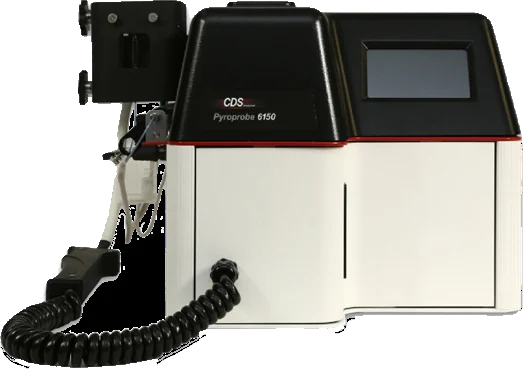
CDS 6150

Pyrolysis system for GC-MS

CDS 6150 is a further member of the CDS pyrolysis line, used with GC-MS for temperature-programmed pyrolysis of solid samples. The touchscreen on the instrument starts a method with one key and shows the run as it develops, while the reusable quartz tube lets an analyst watch how the sample behaves. Thermal desorption and dynamic headspace are available as added functions.

  • Touchscreen control with one-key method start
  • Reusable quartz pyrolysis tube, with the sample visible during heating
  • Programmable ramps of up to 10 steps per program
  • Reaction gas switching, including air for simulated combustion
  • Optional thermal desorption and dynamic headspace functions
  • Optional autosampler, cryogenic trap and pyrolysis database
Pyrolysis temperatureAmbient to 1300 °C, 1 °C increments
RepeatabilityRSD ≤1.5% (polystyrene)
Ramp programUp to 10 steps
04

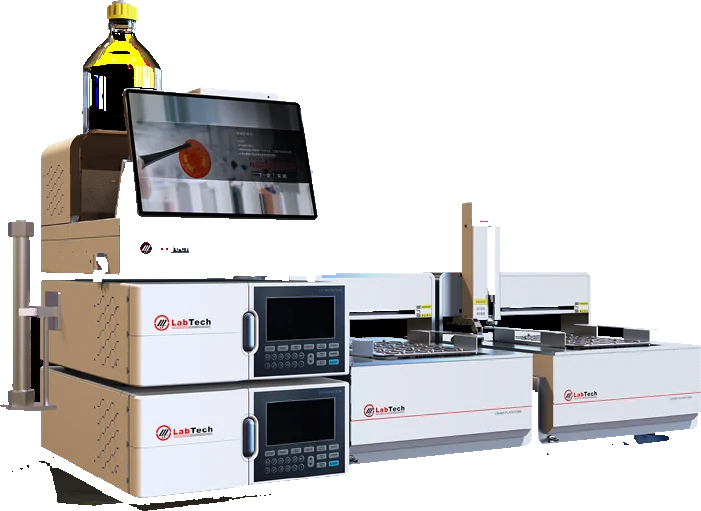
PT3000

Automated purge-and-trap system for water and soil

PT3000 is a fully automated purge-and-trap concentrator for volatile organic compounds in water and soil. It pairs a directly heated trap with room-temperature centrifugal water removal, adds internal standard under electronic pressure control, and prepares calibration curves for target and surrogate compounds without operator input. Separate soil and water paths limit carryover between matrices.

  • Directly resistance-heated trap, unwrapped, for fast ramping and tight control
  • Room-temperature spiral centrifugal water removal with no analyte loss
  • Internal standard added by electronic pressure control within one second
  • Automatic calibration curves for target and surrogate compounds
  • Separate soil and water paths, with an anti-blocking soil flow design
  • Physical defoaming and a photo-radiation-heated purge tube for polar VOCs
  • One software package runs both concentrator and autosampler
Internal standard additionElectronic pressure control, within 1 s
Water removalRoom-temperature spiral centrifugal
Trap heatingDirect resistance heating, unwrapped

Full specifications for other configurations, voltages and options are available on request.

The range

Configurations and accessories.

Applications

Where this range is used.

  • Volatile organic compounds in drinking water, wastewater and groundwater
  • VOCs in soil, sediment and solid waste
  • Very volatile organic compounds (VVOCs) in water and soil
  • Foam-forming leachate and industrial wastewater, handled by physical defoaming
  • Polymers and elastomers fingerprinted by pyrolysis GC-MS
  • Additive and degradation-product profiling with programmed pyrolysis

Environmental & Water → · Materials, Geology & Mining →

Questions

Before you buy.

What is the difference between pyrolysis and purge-and-trap?

Pyrolysis heats a solid sample until its larger molecules break into fragments that a GC can separate, which is how polymers and insoluble materials are characterized. Purge-and-trap sparges volatiles out of a water or soil sample onto a trap, then heats the trap to transfer them to the column. CDS builds the pyrolysis instruments; PT3000 is the purge-and-trap system.

What temperature range does a CDS pyrolyzer cover?

The pyrolysis line runs from ambient temperature to 1300 °C in 1 °C increments, with a stated accuracy of ±0.1 °C. Heating uses a platinum resistance system with real-time monitoring, and the heated transfer line to the GC inlet is rated to 350 °C.

Can PT3000 run soil and water samples in the same batch?

PT3000 has independent preparation paths for soil and water, plus an anti-blocking design on the soil line, so the two matrices can be handled on one instrument. Automatic physical defoaming protects the flow path when samples foam.

Send the matrix and the limit

We reply in one working day with a configuration, the consumables it needs and a lead time.