ARYUNG / Specifications
Specifications

What the whole range shares.

Operating limits, construction, the model-code logic, installation notes and the catalogue's fault-finding table — the detail behind the model tables.

Operating data

Limits and construction.

Operating data

Use fluidWater-soluble coolant, cutting oil, grinding oil
Viscosity1–32 cSt; 1–2 cSt for multi-stage / high-pressure series
Use temperature80 °C maximum
Protection classIP44 / IP54 depending on model
Insulation classF
Motor frameDie-cast aluminium (ALDC)
Casing / pump bodyCast iron (FC250)
ImpellerPowder steel; cast iron on ACP-EF; stainless on ACPQ-HSP
ShaftSteel
Outlet optionsScrew outlet as standard; flange outlet (F) on MF / BMF

Reading the model code

ACPARYUNG coolant pump family
400Motor output in W — 60 to 5500 W across the range
MF / BMF / HMFS / HSP / A / EFHydraulic series and pump type
FFlanged outlet where the series offers it
18 / 25Immersion depth in cm — 180 mm / 250 mm
2/2 · 2/3 · 4/4Voltage code: 200/220 V · 220/380 V · 415/440 V

Example: ACP-400MF(S) F 2/2 — 400 W multi-stage immersion pump, flanged outlet, 200/220 V.

Installation

Notes on handling.

Fault finding

Causes and countermeasures.

From the catalogue. Check wiring, rotation, viscosity and suction conditions before opening the pump.

Fault conditionCauseMeasure
No rotation, no soundSupply short circuit or poor connectionCheck wiring and connections
No rotation, no soundMotor winding short circuitReturn to factory for repair
No rotation, with soundVoltage too lowCheck voltage
No rotation, with soundBearing wear / stickingReplace bearing
No rotation, with soundStator and rotor contactReturn to factory for repair
No rotation, with soundForeign matter in the fanRemove foreign matter
Motor overheatingVoltage high, low or unbalancedRegulate / check voltage
Motor overheatingWinding partial short circuitReturn to factory for repair
Motor overheatingBearing wearReplace bearing
Reduced dischargeSuction pipe drawing airCheck suction piping
Reduced dischargeAir bubbles in the coolantFit an overflow; separate return and suction tanks
Reduced dischargePump running in reverseSwap two of the three phase terminals
Reduced dischargeBlocked pipingInspect pipe; remove foreign matter
Reduced dischargeMechanical seal wearReplace mechanical seal
Poor pressureDischarge valve closed or throttle valve fittedOpen the valve; open the air vent
Abnormal sound / vibrationBearing wearReplace bearing
Abnormal sound / vibrationOne phase short circuitCheck for short circuit
Water hammerSudden valve opening / closingFit a pressure shock absorber
Wiring

Rotation and voltage.

Check the nameplate and wiring diagram, then confirm rotation before coupling the pump to the machine.

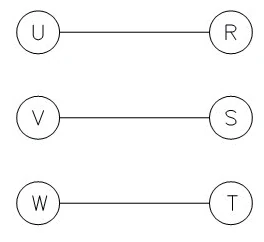
Wiring diagram 1

Wiring diagram 1 · catalogue p.105

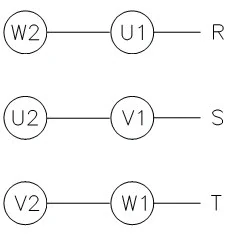
Wiring diagram 2

Wiring diagram 2 · catalogue p.105

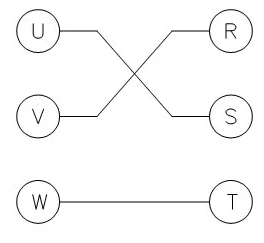
Wiring diagram 3

Wiring diagram 3 · catalogue p.105

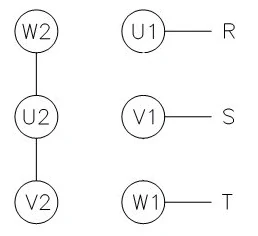
Wiring diagram 4

Wiring diagram 4 · catalogue p.105

Still not sure which series?

Tell us the machine, the tank depth, the flow and the head. We will pick the model and confirm the voltage.